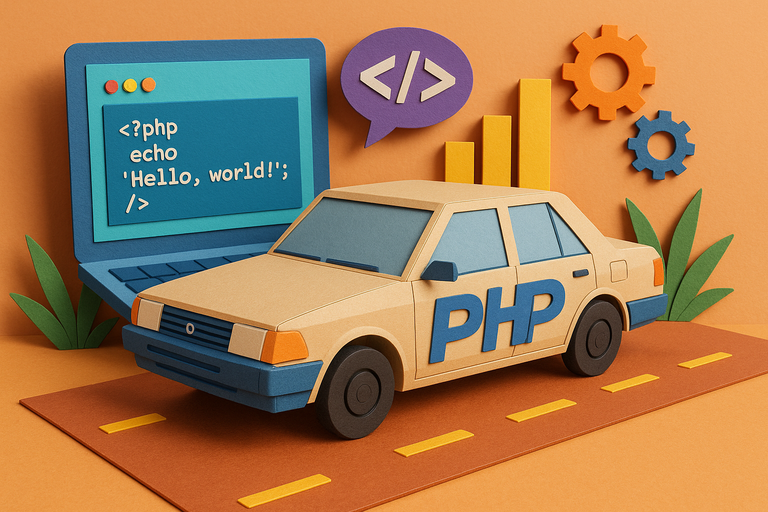
The Toyota Corolla Of Programming
SMRTR summary
A Toyota Corolla of programming languages, PHP powers between 70 and 80 percent of the world's websites despite decades of mockery from "serious" programmers. Released in June 1995 by Rasmus Lerdorf as "Personal Home Page Tools," this server-side scripting language shares a remarkably parallel history with JavaScript, both experiencing standardization in 1997 and corporate support in the 2010s.
"I had to give up control of PHP," Lerdorf explained in a 2012 IEEE interview. "It's not just them contributing to my project—it becomes our project, and that really changed the nature of PHP."
Once derided as a "fractal of bad design," PHP has quietly evolved into a modern language with OOP features, functional programming constructs, and an open-source ecosystem complete with conferences and a JetBrains IDE.
The language's future now hinges on FrankenPHP, a Go-based runtime recently adopted by the PHP Foundation that simplifies containerization while maintaining compatibility with existing codebases—potentially giving this persistent underdog yet another act in its improbable 30-year journey.
SMRTR provides this summary for quick context. The original article belongs to Daily.dev.
Read the original article