
Sabotage won’t save your job in the age of AI—but mastery will
SMRTR summary
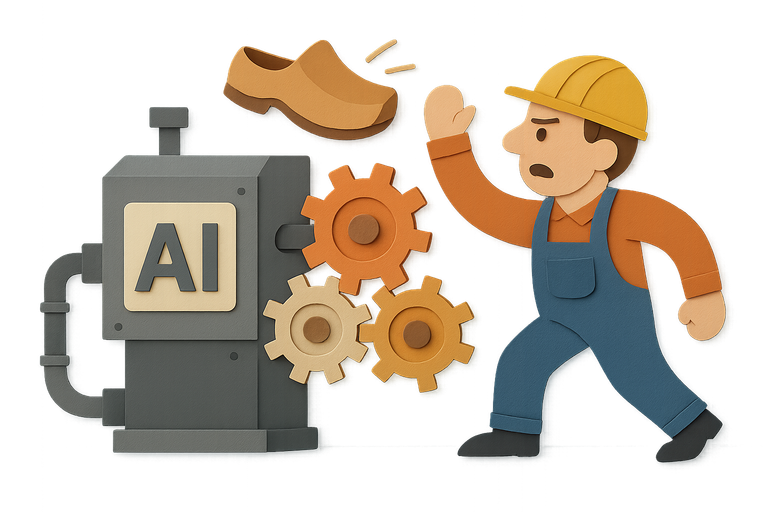
Nearly one in three employees admit to actively sabotaging their company's artificial intelligence initiatives, throwing digital wooden shoes into the gears of progress.
That striking statistic from a recent industry survey helps explain why more than 80% of corporate AI projects are failing to deliver meaningful returns. The problem isn't always the technology—it's the humans fighting it.
The parallels to history are unmistakable. The word "sabotage" itself comes from workers during the Industrial Revolution who literally threw their wooden shoes, called sabots, into machines to break them. They thought destroying the technology would save their jobs. It didn't.
Today's workplace sabotage looks different but feels familiar. In software testing, employees cling to outdated methods, insist on hand-scripting every test, or spread doubt about AI-generated results. Meanwhile, new AI tools can generate thousands of test scripts in under an hour—work that traditionally takes human teams weeks or months.
The resistance is understandable but ultimately futile. Legacy testing methods already struggle to keep pace with modern applications, missing bugs and burning through budgets.
The workers who thrived during industrialization weren't the saboteurs—they were those who learned to operate and command the machines, becoming supervisors and experts in new processes.
History suggests the same pattern will repeat: saboteurs lose, machine masters win.
SMRTR provides this summary for quick context. The original article belongs to SD Times.
Read the original article