
React Basics: Thinking in React
SMRTR summary
For many developers, React feels like a tangled mess of DOM manipulations until they experience what one programmer describes as the moment when "UI development stops feeling like a tangle of jQuery patches and instead feels like snapping together Lego pieces." This transformation happens when developers learn to think in React's mental model rather than simply memorizing its APIs.
The key shift involves moving from manually updating web pages to letting the interface automatically reflect your data's current state. React's official documentation outlines a five-step process that turns this concept into practice: break your design into reusable components, build a static version without interactivity, identify what data actually changes over time, determine which component should manage that changing data, and finally add the ability for user actions to flow back up and update the state.
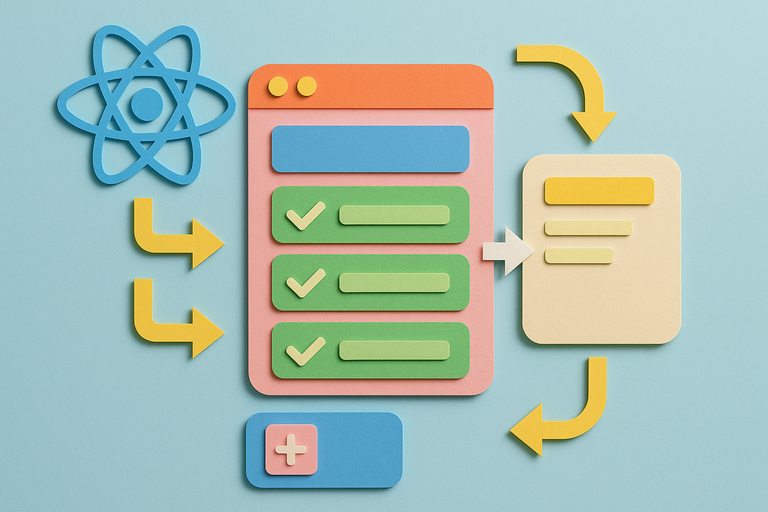
Using a simple todo application as an example, developers learn to see their interface as a hierarchy where data flows downward from parent to child components, while user interactions flow upward to update the source data. This one-directional flow makes applications far more predictable and easier to debug than traditional approaches where changes can happen anywhere.
SMRTR provides this summary for quick context. The original article belongs to Daily.dev.
Read the original article