
How to use TanStack DB to build reactive, offline-ready React apps
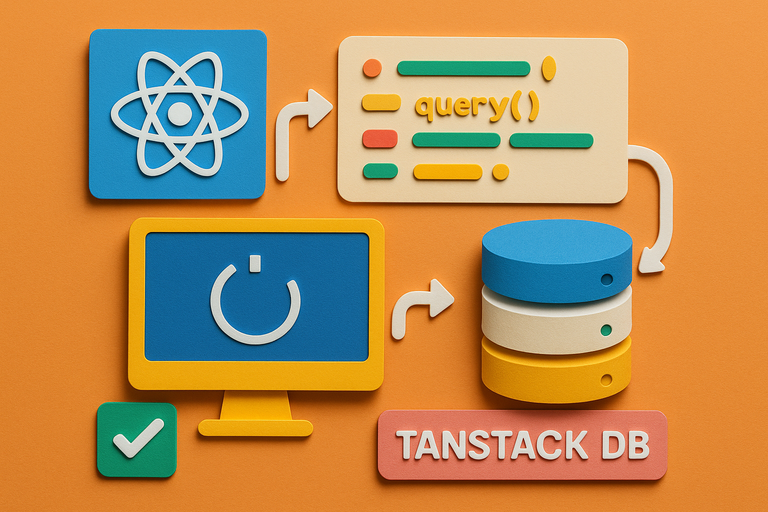
SMRTR summary
React developers typically juggle multiple useState hooks, loading flags, and error handling just to fetch and display data. TanStack DB throws out that entire playbook.
This new client-side database treats your app's state like a reactive SQL database. Instead of managing loading states manually, you write live queries that automatically update when data changes. Instead of waiting for server responses, mutations update the UI instantly through optimistic updates.
The difference is striking. Traditional React state management requires boilerplate-heavy code with separate variables for data, loading states, and errors scattered across components. TanStack DB replaces all of that with simple, declarative queries.
Collections act like normalized tables in your client-side cache. Live queries use SQL-like syntax but re-run automatically when underlying data changes. Optimistic mutations update the UI immediately, rolling back only if requests fail.
Under the hood, a differential dataflow engine called D2S handles the complexity. It only recalculates what actually changed, maintains efficient memory usage, and propagates updates instantly across your app.
The technology shines for offline-friendly applications where users expect desktop-like responsiveness. Rather than building traditional server-dependent React apps, developers can create local-first experiences that feel native while requiring remarkably little code.
For teams wrestling with Redux complexity or scaling useContext implementations, TanStack DB offers a fundamentally different approach to state management.
SMRTR provides this summary for quick context. The original article belongs to Daily.dev.
Read the original article