How to Build an AI Medical Scribe with Voice Agents
SMRTR summary
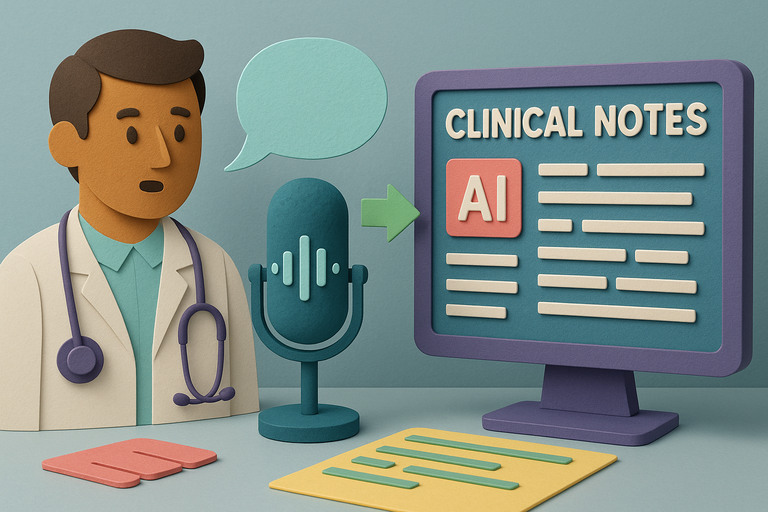
Doctors spend two hours documenting patient visits for every hour they actually spend with patients—a staggering inefficiency that has sparked a $600 million market for ambient AI scribes that passively listen to conversations and automatically generate clinical notes.
These systems follow a deceptively simple three-stage pipeline: converting speech to text, extracting clinical meaning with large language models, and formatting structured notes for electronic health records. But the devil lurks in the details.
The biggest challenge isn't the AI—it's accurately transcribing medical conversations filled with drug names like "hydroxychloroquine" and "lisinopril" while patients and providers talk over each other in noisy clinical environments. Standard speech recognition models miss medical terms at rates of 8 to 24 percent, while purpose-built medical systems reduce that to under 5 percent.
For healthcare startups, this represents both opportunity and accessibility. The core technology that powers expensive enterprise platforms like Nuance DAX is now available through APIs, meaning small teams can build competitive medical scribes without years of in-house model development. The real differentiation happens in workflow design and earning clinician trust—not reinventing speech recognition from scratch.
SMRTR provides this summary for quick context. The original article belongs to HackerNoon.
Read the original article