
How to Build a Workflow Orchestration Engine
SMRTR summary
Every backend engineer eventually faces the same quiet crisis: a single automated job mutates into a tangled web of scripts, each one calling another, with no clear record of what ran or why the pager went off at 3 a.m.
Workflow orchestration engines exist to solve exactly this. Tools like Apache Airflow, Temporal, and AWS Step Functions take over that chaos, running multi-step processes in the right order, retrying failures, and keeping a durable record of everything.
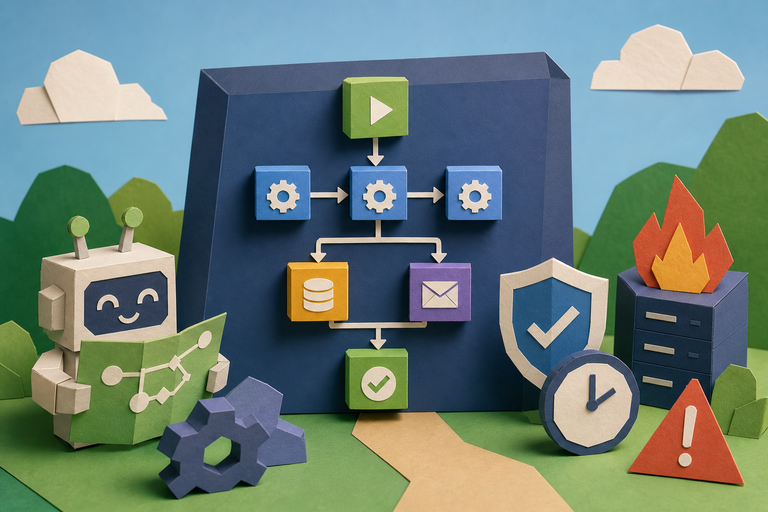
At their core, these systems model work as a directed acyclic graph, where each task waits for its upstream dependencies before firing. Two distinct philosophies drive them: task-based engines like Airflow retry each step from scratch, while durable execution engines like Temporal replay an event history, allowing workflows to survive crashes and resume mid-thought, even weeks later.
The practical takeaway for engineers is blunt: use one of these systems rather than building your own, understand the internals so you know which knob to turn when things go wrong, and bake in idempotency from day one, because every task will eventually run twice.
SMRTR provides this summary for quick context. The original article belongs to Hacker Noon.
Read the original article