
How Developers Actually Feel About Pair Programming
SMRTR summary
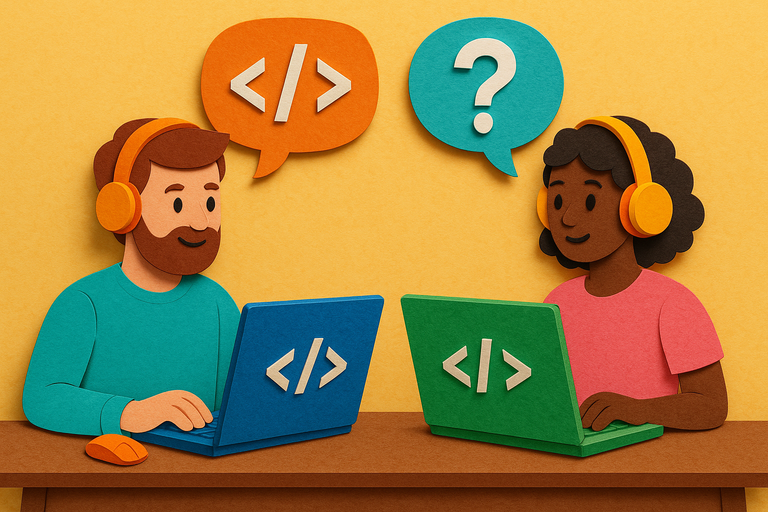
In the realm of computer science education, a groundbreaking study is challenging traditional notions of pair programming. Researchers from the University of Seville and UC Berkeley have developed "twincode," an innovative platform that allows students to code collaboratively online.
The study, conducted across two continents, explored how gender pairing affects perceived productivity and partner competency in programming exercises. Participants were unknowingly paired with virtual partners of different genders, controlled by the researchers.
Surprisingly, the results revealed no significant impact of partner gender on students' perceptions of productivity or technical competence. This finding contradicts common assumptions about gender bias in computer science.
The researchers' clever use of virtual partners allowed for precise control of variables, offering a fresh perspective on gender dynamics in coding education. As universities increasingly embrace remote learning, tools like twincode could reshape how we approach collaborative programming and address potential biases in STEM fields.
SMRTR provides this summary for quick context. The original article belongs to Hacker Noon.
Read the original article