
A field guide to the modern front end for developers who hand-wrote HTML
SMRTR summary
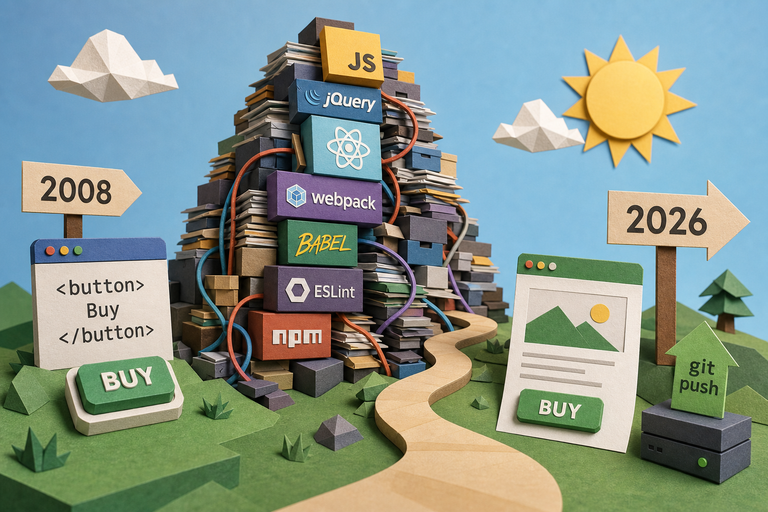
A button. Just a simple "Buy" button. In 2008, it was a handful of HTML and it worked everywhere, instantly. Today, that same button sits beneath 47 layers of files, frameworks, and build tools, supported by a quarter-million dependencies.
That journey, two decades of it, is what one sweeping technical deep-dive traces with surprising clarity. The story isn't chaos, it's cause and effect. jQuery solved browser inconsistencies. React solved the pain of manually syncing data to the screen. Webpack solved the chaos of unconnected files. Rust-powered tools like Vite solved the agony of waiting 90 seconds for a build. Each fix created the next problem.
And here's the twist. After sprinting through 47 layers of increasing complexity, the industry in 2026 is racing back toward something familiar: server-rendered HTML, almost no JavaScript shipped to the browser, deployed with a single git push.
The pendulum, it turns out, swings both ways. The instinct you had in 2008 dragging files into an FTP window wasn't wrong. It was just early.
SMRTR provides this summary for quick context. The original article belongs to Hacker News.
Read the original article