
A Beginner’s Guide to Robotics with Python
SMRTR summary
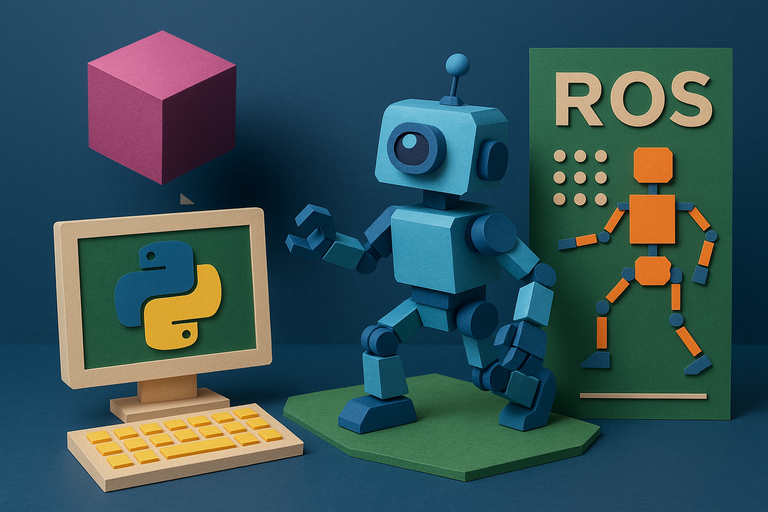
A cube floating in digital space obeys the same gravitational pull as objects on Earth — exactly 9.8 meters per second squared downward. That's the foundation of PyBullet, a physics simulator that's democratizing robotics education by letting anyone build and test virtual robots without expensive hardware.
The simulator uses URDF files, essentially XML blueprints that define a robot's skeleton much like bones structure a human body. These files specify two key components: links, which are the solid parts like bones, and joints, which connect them like muscles and enable movement.
Take the iconic R2D2 droid. In PyBullet, it becomes a tree of 15 joints connecting various body segments. While some joints remain fixed, others like the wheel joints can rotate infinitely, spinning around programmed axes to propel the droid forward or make it turn.
The beauty lies in standardization. Every robot, whether a simple cube or complex humanoid, exposes the same 17 universal attributes, making them equally accessible to beginners learning robotics fundamentals through Python code rather than costly physical prototypes.
SMRTR provides this summary for quick context. The original article belongs to Daily.dev.
Read the original article