
40 Lines of Go That Cut Our LLM Bill by 71%
SMRTR summary
A three-word document title probably should not cost the same as a complex legal analysis. But for a lot of engineering teams in 2026, that's exactly what's been happening.
When OpenAI slashed prices for its GPT-5.6 Luna model by 80% this past July, one development team finally looked hard at their traffic mix and realized the vast majority of their requests were trivially simple tasks like naming files, summarizing diffs, and extracting form fields.
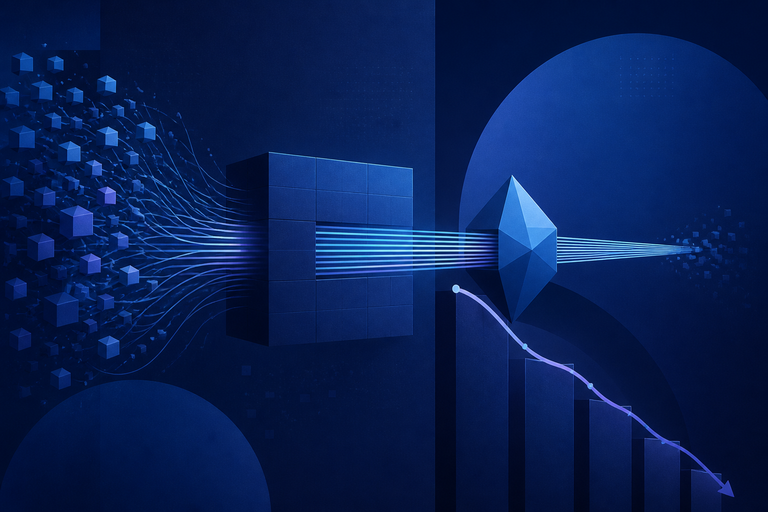
Their solution was elegant and counterintuitive. Instead of trying to predict which requests were hard before sending them, they flipped the logic entirely: send everything to the cheap model first, then inspect the output, and only escalate to the expensive model if something structural fails.
The result was a 71% cost reduction, with 81% of requests handled entirely by the cheaper model.
The catches are real. Tail latency got worse. Streaming becomes nearly impossible to reconcile with the approach. And critically, when escalating, you never show the stronger model the cheaper model's failed attempt. That anchors it to the wrong answer.
SMRTR provides this summary for quick context. The original article belongs to Dev.to.
Read the original article