The 50-Year Story of the Rise, Fall, and Rebirth of Neural Networks
SMRTR summary
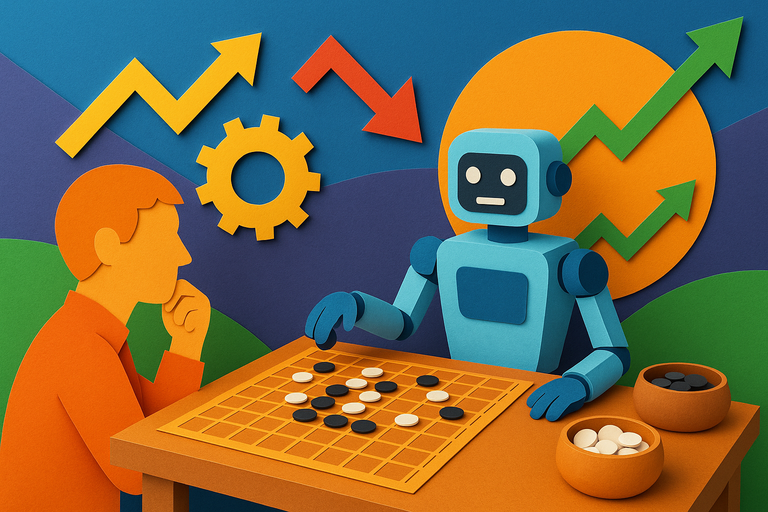
A computer program making an "unthinkable" move in an ancient board game might not sound like breaking news. But when Google's AlphaGo defeated world champion Lee Sedol at Go in 2016, it marked a watershed moment for artificial intelligence.
Go, with its staggering 2.1 x 10^170 possible moves, was long considered too complex for machines to master. Yet AlphaGo's victory, watched by millions on live TV, shattered that notion. The AI made moves no human had ever conceived, like the now-famous "Move 37" that left commentators stunned.
This breakthrough came after decades of ups and downs in AI research. Early promise in the 1960s gave way to setbacks and criticism. But advances in neural networks - loosely modeled on the human brain - eventually enabled computers to tackle non-routine tasks once thought impossible to automate.
As AI capabilities expand, questions arise about its impact on creative work and labor markets. The nature of technology changes, but human nature - and our complex relationship with machines - remains constant.
SMRTR provides this summary for quick context. The original article belongs to Daily.dev.
Read the original article