
Teaching AI agents to ask better questions by playing “Battleship”
SMRTR summary
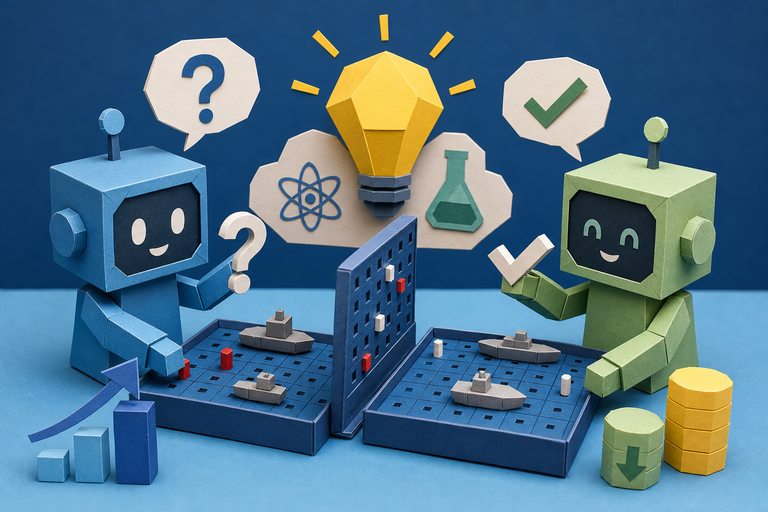
A game of Battleship is helping scientists rethink the future of artificial intelligence. Researchers at MIT and Harvard used the classic guessing game to probe a surprising weakness in today's most powerful AI language models: they're not very good at asking smart questions.
By introducing a "Collaborative Battleship" framework, where one AI asks about hidden ships and another answers, the team discovered that smaller, cheaper models could dramatically improve their performance with a smarter inference strategy. One lightweight model jumped from beating humans just 8 percent of the time to 82 percent, while running at roughly 1 percent the cost of a frontier model like GPT-5.
"Today's language models are primarily optimized to answer complex queries, but it's less clear whether they learn to ask good questions for themselves," says MIT PhD student Gabriel Grand.
The implications stretch well beyond board games, pointing toward AI that could one day accelerate scientific discovery by navigating vast, uncertain problem spaces more efficiently.
SMRTR provides this summary for quick context. The original article belongs to Daily.dev.
Read the original article