
Stop Thinking of AI as a Coworker. It's an Exoskeleton.
SMRTR summary
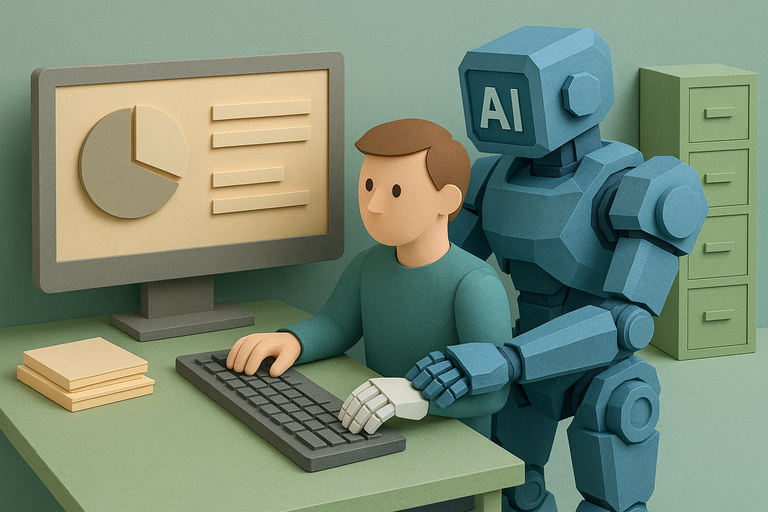
Physical exoskeletons at Ford reduce workplace injuries by 83 percent, and a similar revolution is quietly reshaping how companies think about artificial intelligence. Rather than pursuing autonomous AI agents that work independently, the most successful organizations are treating AI like an exoskeleton that amplifies human capability instead of replacing it.
Companies deploying AI as standalone decision-makers often struggle with disappointing results, while those using AI to enhance their existing workforce see transformative outcomes. The difference lies in keeping humans firmly in control of strategic decisions while letting AI handle the heavy lifting of data analysis and repetitive tasks.
This "micro-agent" approach breaks down complex jobs into discrete components. AI excels at writing commit messages, searching code patterns, and generating documentation, but humans retain responsibility for architectural decisions and feature priorities. The productivity gains compound beyond simple time savings, much like industrial exoskeletons that don't just reduce physical strain but prevent injuries and extend careers.
The future belongs not to autonomous systems working independently, but to AI tools so seamlessly integrated into human workflows that they become natural extensions of human intelligence.
SMRTR provides this summary for quick context. The original article belongs to Daily.dev.
Read the original article