
New AI system helps robots transfer virtual training into real-world tasks
SMRTR summary
Robots have long struggled with a stubborn problem: what they learn in virtual simulations often falls apart in the messy, unpredictable real world. Researchers at Aston University and the University of Birmingham may have found a fix.
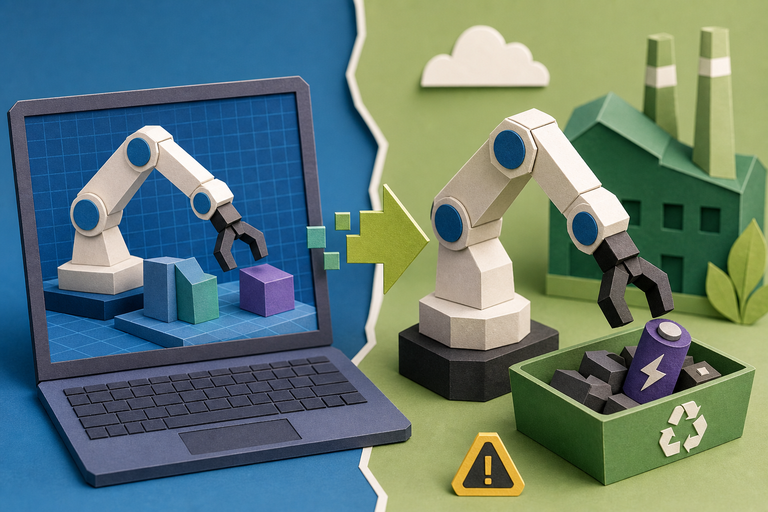
Their new AI-based training method uses artificial intelligence to generate variations in environmental conditions during simulation, allowing robots to adapt more smoothly once deployed. The result is a system that bridges what scientists call the "sim-to-real gap," using only a small amount of real-world testing data.
"Our long-term vision is to enable plug-and-play intelligent robotic systems that can be trained in simulation and rapidly deployed in new environments with minimal reconfiguration," said Dr. Alireza Rastegarpanah of Aston University.
The approach could be especially valuable in high-risk settings like lithium battery recycling, where testing robots around hazardous materials carries real dangers. The research was published in Scientific Reports.
SMRTR provides this summary for quick context. The original article belongs to Interesting Engineering.
Read the original article