
NASA and Google Test AI ‘Space Doctor’
SMRTR summary
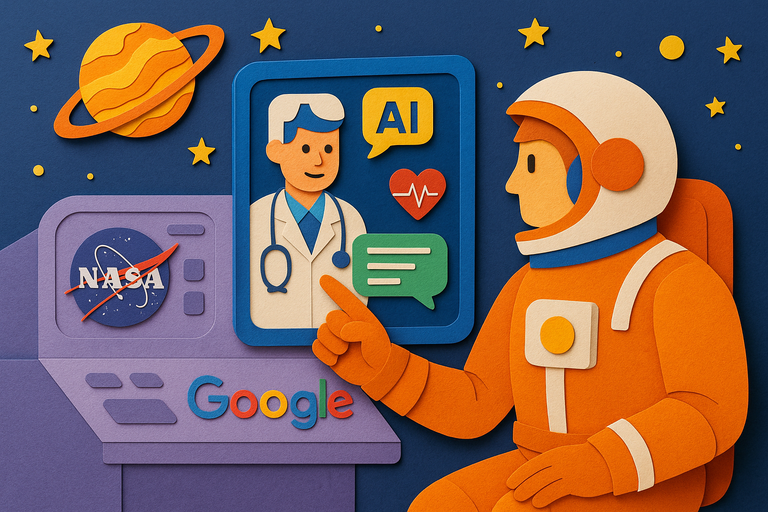
Floating millions of miles from Earth, astronauts might soon rely on an AI doctor when medical emergencies strike. Google and NASA are developing the "Crew Medical Officer Digital Assistant" to bridge the critical communication gap that occurs during deep space missions.
"As distance from the Earth increases, so will latency and communication gaps," explains David Cruley of Google Cloud Platform. When every second counts during a medical crisis, waiting 44 minutes for a round-trip response from Earth physicians could prove deadly for Mars-bound astronauts.
The AI assistant, trained on spaceflight data, employs natural language processing to provide immediate medical guidance, whether the crew's designated medical officer is incapacitated or simply needs additional diagnostic support.
Early trials involving doctors and an astronaut show promising results, with the system delivering "reliable" diagnoses based on reported symptoms.
While designed for NASA's Artemis moon missions and eventual Mars expeditions, this technology has earthbound potential too. Cruley notes the lessons learned could revolutionize healthcare delivery "in remote or underserved areas with limited access to healthcare professionals."
SMRTR provides this summary for quick context. The original article belongs to PYMNTS.
Read the original article