
Medical Schools Use AI Patients to Help With Clinical Training
SMRTR summary
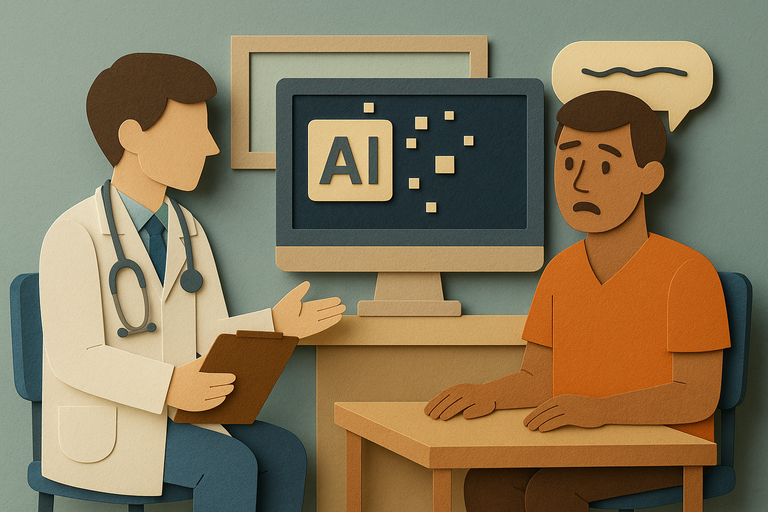
Virtual patients are now speaking back to medical students in classrooms across the U.K. and U.S., offering real-time conversations complete with facial expressions and evolving symptoms. These AI-generated patients represent a fundamental shift in medical education, moving away from costly, hard-to-schedule human actors toward always-available digital simulations.
Medical schools are embracing this technology to address mounting pressures including faculty shortages, rising costs, and limited clinical placements. At Southern Illinois University, students practice with an AI patient named Randy Rhodes, while NYU Langone uses sophisticated systems that allow virtual patients to change their emotional tone based on how students ask questions.
The technology enables repeated practice of sensitive scenarios often difficult to arrange in real settings, such as mental health consultations or chronic illness discussions. Unlike traditional standardized patients played by actors, AI patients can simulate rare conditions and provide consistent experiences across all student cohorts.
Harvard Medical School reports using AI tools to teach clinical reasoning and cultural sensitivity, while educators analyze detailed performance data to assess whether students interrupt patients or miss key symptoms. This data-driven approach allows instructors to identify weaknesses early and tailor coaching accordingly, potentially producing better-prepared clinicians.
SMRTR provides this summary for quick context. The original article belongs to PYMNTS.
Read the original article