
I Cloned Myself With Gemini’s AI Avatar Tool. The Result Was Unnervingly Me
SMRTR summary
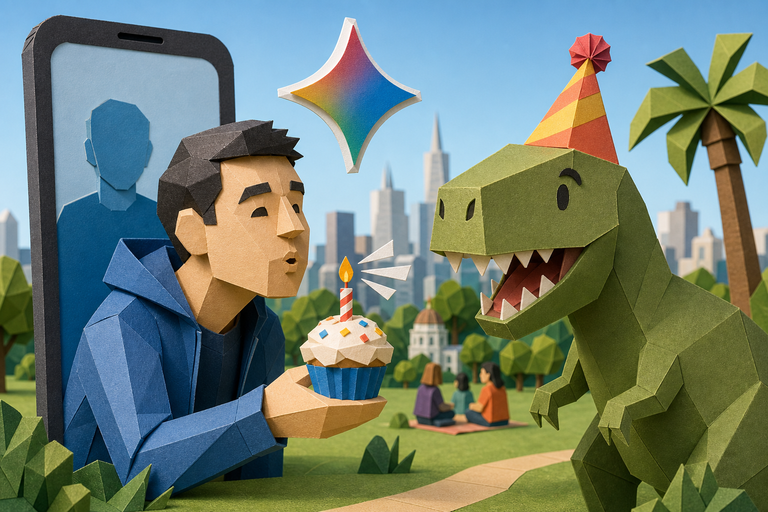
A man sings happy birthday to a prehistoric dinosaur in San Francisco's Dolores Park. A cupcake appears in his hand. He blows out the candle. And none of it actually happened.
Google's Gemini app now lets paying subscribers create AI-generated videos using a digital clone of themselves. The setup takes about five minutes: sit in good lighting, read some two-digit numbers into your phone camera, slowly turn your head, and suddenly, you exist as a deepfake.
The results are unsettling in their specificity. The park looks like the actual park. The face looks like the actual face, right down to, as one tester noted, "the chin fat."
Google says safety is central to the feature, with one DeepMind product lead stating, "We try to prevent harm... in a way where we're not blocking benign things." Unlike OpenAI's previous approach, Google restricts avatar videos to self-generated content only.
Still, the technology raises real questions about where digital identity ends and something far stranger begins.
SMRTR provides this summary for quick context. The original article belongs to Wired.
Read the original article