
General Intuition bets that video games can train AI agents for the real world
SMRTR summary
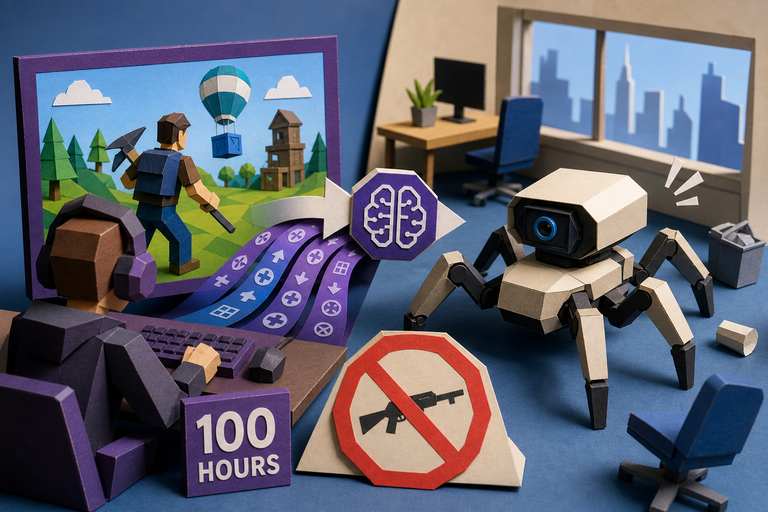
A giant, bug-like robot navigated an office in New York this week, occasionally bumping into chairs and trash bins like, as one observer noted, a toddler still learning how her body moves through the world. It took just eight minutes of real-world data to train it.
That robot shares a brain with an AI agent that has been playing Fortnite for 100 hours straight. Both are powered by General Intuition, a startup that has raised $320 million at a $2.3 billion valuation, with backing from Khosla Ventures, Jeff Bezos, Eric Schmidt, and researchers at Google DeepMind and MIT.
The secret ingredient? Not video footage of gameplay, but the action data embedded within it. Exactly which buttons players pressed, and when.
"We have a single model that can respond to Fortnite information on the screen and take action, but also to real-world dynamics in a way that an LLM could never," said CEO Pim de Witte.
The company has drawn a firm ethical line: no lethal military applications, ever.
SMRTR provides this summary for quick context. The original article belongs to TechCrunch.
Read the original article