File-to-Markdown Conversion Is Becoming an AI Input Layer: Here's Why
SMRTR summary
Most teams treat document conversion as a chore. Drop in a PDF, get out some text, feed it to an AI. But Microsoft's open-source tool MarkItDown suggests that framing is dangerously small.
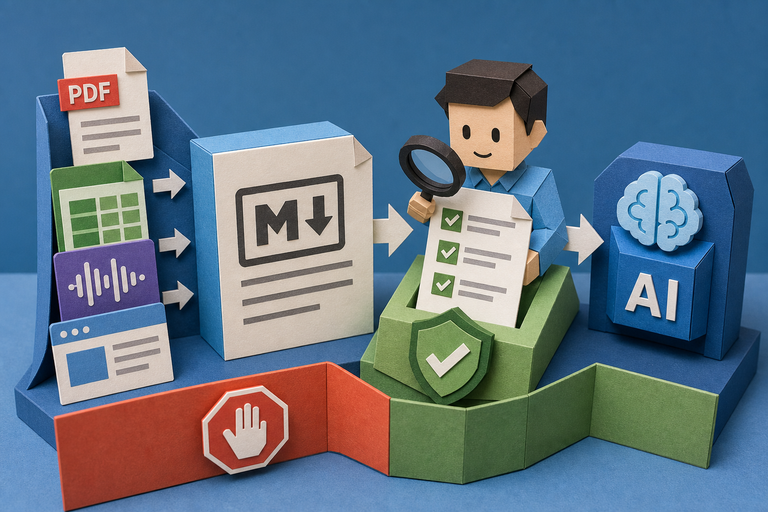
The tool converts files like PDFs, spreadsheets, audio, and web pages into Markdown, and the key insight is that Markdown isn't just an output format here. It's an input layer for AI systems, one that preserves enough structure for machines to reason about while remaining readable enough for humans to actually inspect.
That last part matters more than it sounds. The companion site markitdown.store explicitly prompts users to review converted output before feeding it into AI workflows. That's not a cosmetic feature. It's a safety model.
The project also draws a sharp line between low-risk inputs, like pasted text, and heavier formats that trigger more complex parsing, treating those as separate trust boundaries rather than one permissive pipeline.
The takeaway is quiet but pointed: normalize early, preserve structure, and never let automation build on output no human has verified.
SMRTR provides this summary for quick context. The original article belongs to Hacker Noon.
Read the original article