
Doctors Are Burning Out. Can AI Really Help?
SMRTR summary
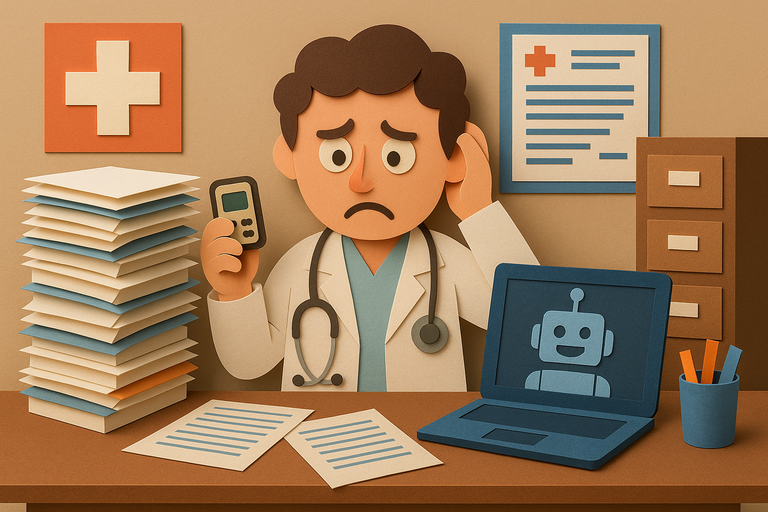
A doctor stares at a beeping pager, swimming in backlogged patients and endless electronic forms, wondering when medicine lost its joy.
It's a crisis reaching critical levels, with over 60% of U.S. doctors reporting burnout according to recent AMA and Stanford Medicine research. The culprit? Administrative overload and paperwork.
"There's a fundamental difference between building AI to impress and building AI to assist," says Dr. Ruben Amarasingham, CEO of Dallas-based Pieces Technologies and a former hospitalist. His company has launched an AI assistant that transcribes and generates medical notes in real time, integrating directly with electronic health records.
Unlike traditional AI systems, Pieces' assistant is designed to "operate almost like a bedside scribe in your pocket," disappearing into the workflow rather than adding another layer of technology.
Early results show promise beyond efficiency. "In our early pilots, doctors told us they were finishing their days earlier. But more importantly, they said they were thinking more clearly," Amarasingham notes.
The burnout challenge extends beyond healthcare. As Sammy Rubin of wellbeing platform YuLife observes, "Solutions need to respect time and energy. They should work in the background rather than demanding a complete lifestyle shift in someone's most stressful moments."
SMRTR provides this summary for quick context. The original article belongs to Forbes.
Read the original article